Top 10 Countries with the Largest Oil Reserves [2026]
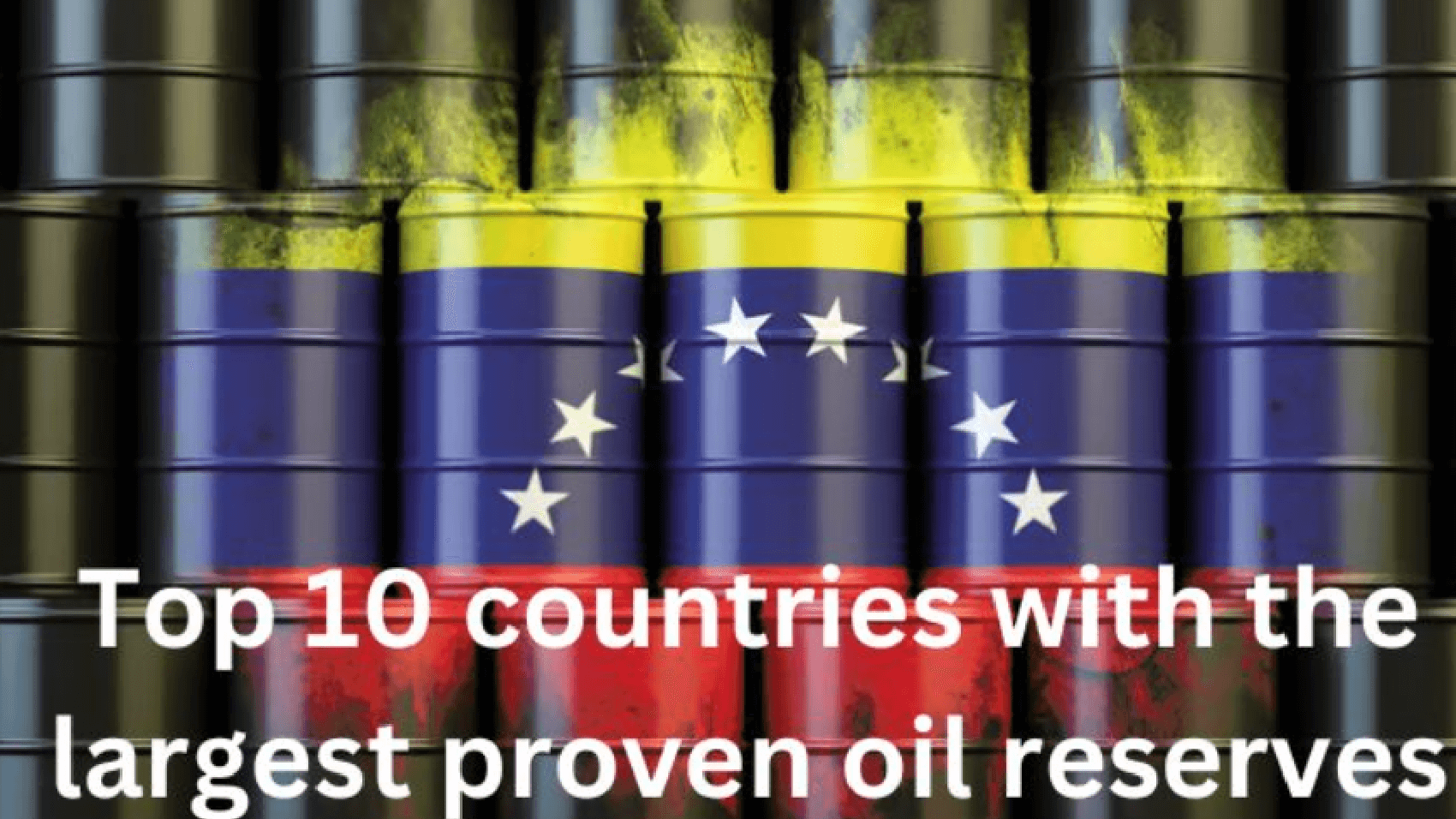
The World's Top Ten Countries with the Largest Proven Oil Reserves
Crude oil remains one of the most critical strategic resources influencing the global economy and international relations. The scale of proven oil reserves not only determines a country's energy security but also shapes its long-term geopolitical influence. Below is a detailed ranking of the world's top ten countries with the largest confirmed oil reserves.
Distribution of Global Proven Crude Oil Reserves
Proven oil reserves refer to the quantity of crude oil that can be commercially extracted with reasonable certainty under current economic and technological conditions. These reserves are highly concentrated, with a handful of countries controlling the majority of the world's oil supply. Geological conditions, technological capabilities, and political stability all influence how these reserves are developed. While actual production may fluctuate over time, the scale of reserves reflects long-term strategic potential. This ranking focuses solely on confirmed reserves, not daily production.
1. Venezuela (303 billion barrels)
Venezuela possesses the world's largest proven oil reserves, approximately 303 billion barrels. Most of these reserves are located in the Orinoco Belt, consisting primarily of extra-heavy crude oil. Extracting this type of oil requires advanced technology and significant investment. Despite economic challenges, its vast reserves position Venezuela as a potential energy powerhouse in the future.
Political instability and international sanctions have constrained the country's production capacity. Aging infrastructure further complicates large-scale extraction. However, if conditions improve, Venezuela could significantly enhance its position in the global oil market. Its reserve base alone ensures long-term strategic importance.
2. Saudi Arabia (267 billion barrels)
Saudi Arabia ranks second with approximately 267 billion barrels of proven oil reserves. The country is home to some of the world's largest and most productive oil fields, where extraction is relatively easy and inexpensive, giving Saudi Arabia a significant competitive advantage.
Oil revenue is the cornerstone of Saudi Arabia's economy. As a leading member of OPEC, the country wields substantial influence over global oil prices. Even as it pursues economic diversification, oil remains central to national wealth. Its vast reserves secure its long-term dominance in the energy market.
3. Iran (209 billion barrels)
Iran holds approximately 209 billion barrels of proven oil reserves, primarily located in the southwestern region and offshore fields. This reserve volume places Iran among the world's most oil-rich nations, with the quality and extractability of its crude further enhancing its value.
International sanctions have restricted Iran's oil exports and hindered the modernization of its industry. Nonetheless, Iran remains a significant energy power. Its reserves ensure a long-term strategic position, unaffected by short-term constraints. Iran's oil wealth continues to shape regional geopolitics.
4. Canada (163 billion barrels)
Canada ranks fourth globally with approximately 163 billion barrels of proven oil reserves. Most of these reserves are derived from oil sands in Alberta. Extracting oil sands is more complex than conventional drilling, but technological advances have significantly improved efficiency.
Canada benefits from political stability and a robust regulatory framework. Environmental concerns remain a major challenge for oil sands development. Despite this, these reserves provide the country with long-term energy security and establish Canada as a reliable supplier in the global market.
5. Iraq (145 billion barrels)
Iraq holds approximately 145 billion barrels of proven oil reserves. Many of its oil fields remain underdeveloped, leaving significant room for growth relative to their potential. Additionally, Iraq boasts some of the world's lowest extraction costs, giving it a strong competitive edge.
Prolonged conflicts have delayed infrastructure development, and political instability continues to affect the investment climate. Nevertheless, Iraq remains a key oil exporter, and its reserves ensure its important role in future global supply growth.
6. United Arab Emirates (113 billion barrels)
The United Arab Emirates holds approximately 113 billion barrels of proven oil reserves, mostly concentrated in Abu Dhabi. Advanced extraction infrastructure, coupled with oil revenue, has driven rapid economic development in the country.
The UAE is actively promoting economic diversification beyond oil, with renewable energy and technology sectors growing quickly. Despite this, oil remains a core strategic asset, providing fiscal stability and long-term security for the nation.
7. Kuwait (102 billion barrels)
Kuwait holds approximately 102 billion barrels of proven oil reserves, primarily from conventional fields that are relatively easy to extract. The national economy relies heavily on oil exports, making these reserves its economic lifeline.
Kuwait maintains a strong position within OPEC. Limited economic diversification makes the country sensitive to oil price fluctuations. However, its vast reserves ensure steady long-term revenue, with oil remaining central to its economic model.
8. Russia (80 billion barrels)
Russia holds approximately 80 billion barrels of proven oil reserves, distributed across vast and often remote regions. Harsh climatic conditions increase extraction costs, but Russia remains one of the world's leading oil producers.
Oil exports are a crucial source of government revenue. Geopolitical tensions affect Russia's access to technology and markets, but its substantial reserves ensure long-term energy influence.
9. United States (74 billion barrels)
The United States holds approximately 74 billion barrels of proven oil reserves. The shale oil revolution has significantly boosted reserve estimates, while advanced drilling technologies have enabled rapid production expansion, transforming the domestic energy landscape.
The U.S. is both a major oil producer and consumer. Domestic production has enhanced energy independence. Although environmental concerns persist, these reserves strengthen national security.
10. Libya (48 billion barrels)
Libya ranks tenth with approximately 48 billion barrels of proven oil reserves. Its crude oil is high-quality and low in sulfur, making it highly sought after in international markets. Libya holds Africa's largest oil reserves.
Political instability has repeatedly disrupted production and exports, and damaged infrastructure remains a significant obstacle. Nevertheless, Libya's reserves hold immense potential. If stability is restored, the country could reclaim its position as a major oil supplier.